Balang: from a game idea to a live multiplayer browser game

Balang is a free, live party game for 2 to 6 players. Everyone can see what’s in a jar of 25 kuih tokens, nobody knows the order they’ll come out in, and you bet on predictions. It runs in the browser with peer-to-peer rooms and no backend server.

  • Live at balang.madebyrazeen.com
  • Public source on GitHub
  • Built by Razeen Iqbal
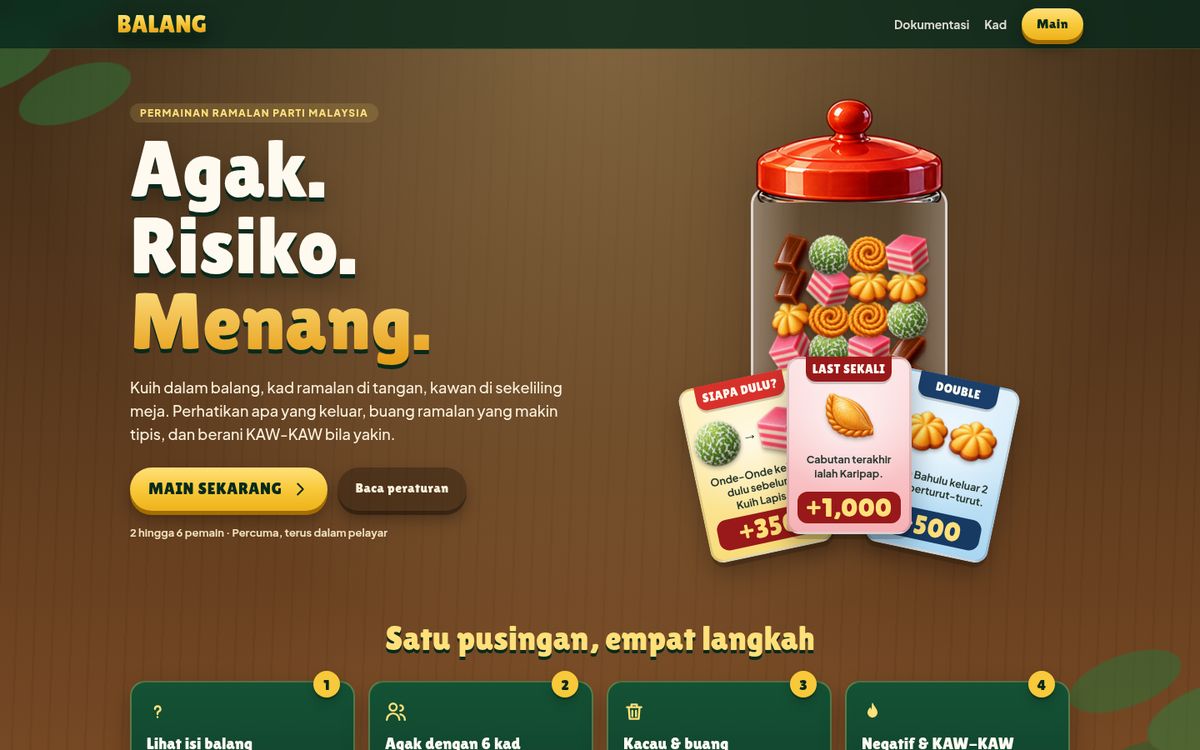
Balang landing page with the headline "Agak. Risiko. Menang.", a red-lidded jar of colourful kuih, three prediction cards and a "Main sekarang" (play now) button.
The live landing page: free, in the browser, for 2 to 6 players.

At a glance.

Ownership

Razeen Iqbal’s own build

Founder portfolio work by co-founder Razeen Iqbal. Not an AI Kopitiam client engagement.

Status

Live

Playable at balang.madebyrazeen.com.

Type

Multiplayer party game

For the web and as a PWA, written in Malay first. Tagline: Agak. Risiko. Menang. (“Guess. Risk. Win.”)

Origin

A game played with friends

It started from a simple social game enjoyed with friends, and draws on the board game Bag of Chips.

Easy to learn. Hard to put down.

Razeen wanted to turn a social game enjoyed with friends into a Malaysian digital game built around probability. It had to be:

  • easy to grasp in the first round
  • strategic without needing advanced maths
  • quick enough that people want another match straight away
  • comfortable to play on a phone

There were two technical challenges. Friends needed to play together without accounts or a game server, and secret cards and the draw order had to stay hidden from other players.
Who did what.

Built by Razeen Iqbal.

Razeen Iqbal

Designed and developed Balang himself, and is the only contributor to the public repository: the game design and rules, the multiplayer, the phone layout and the balance testing.

One round, start to finish.

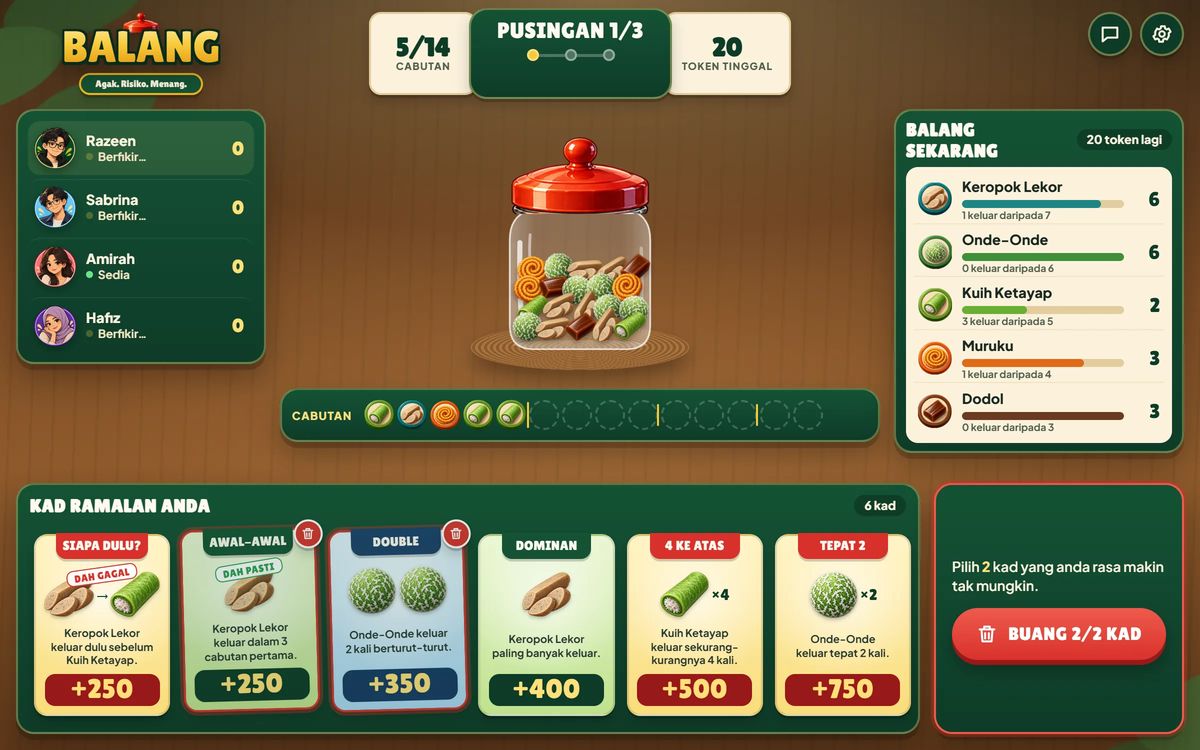
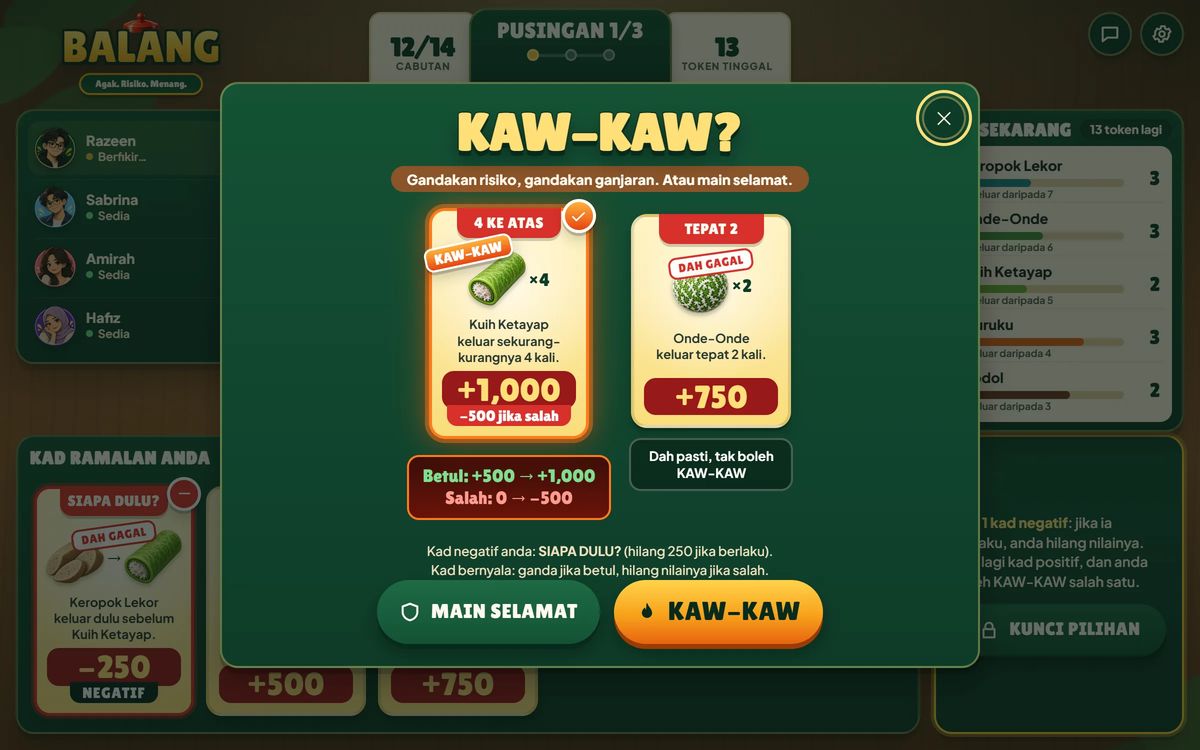
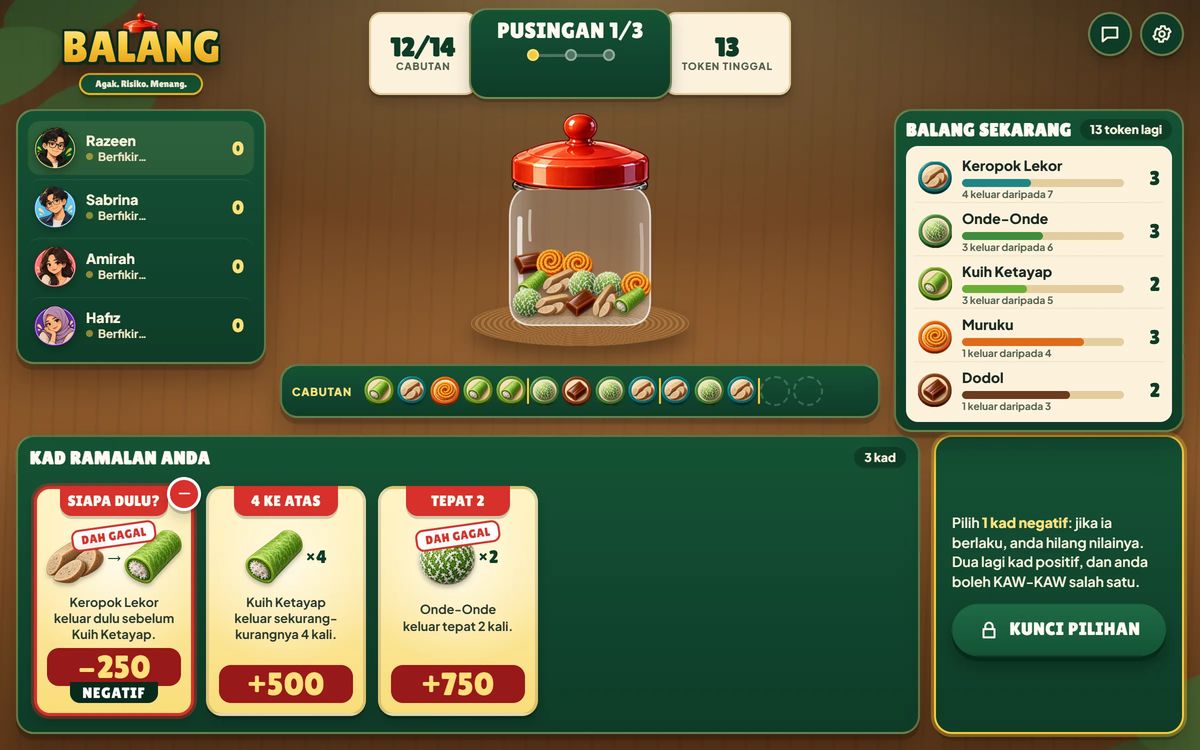
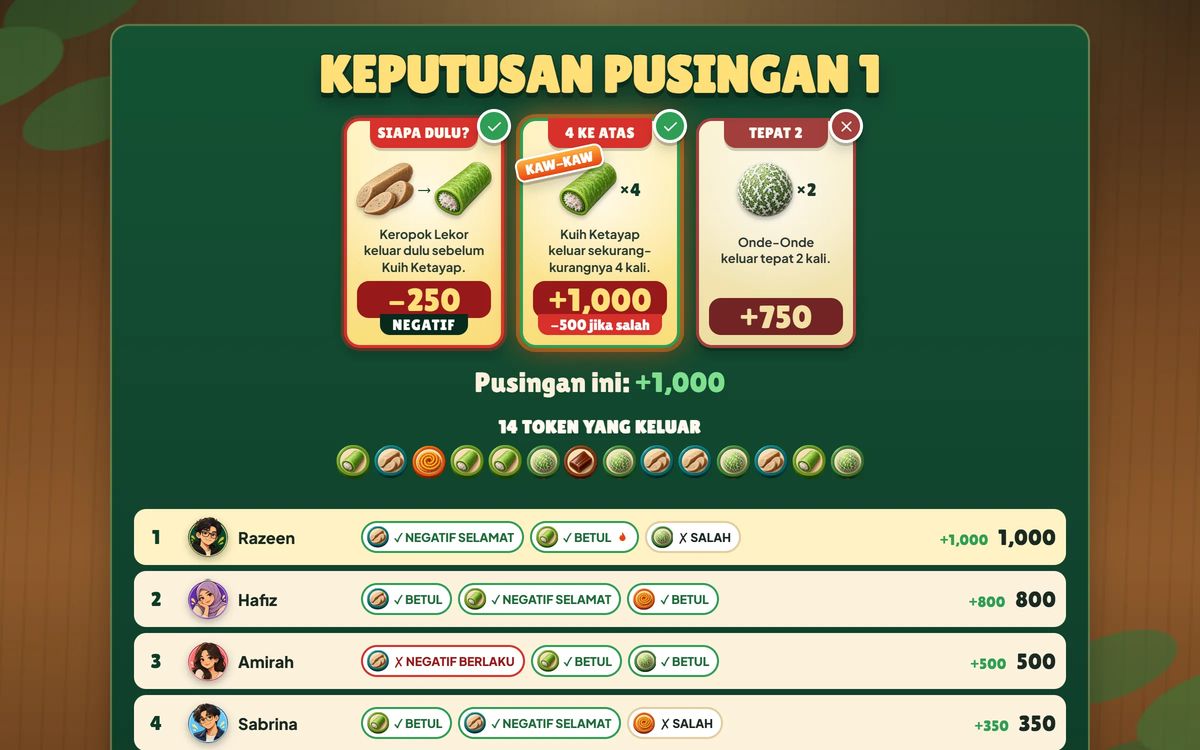
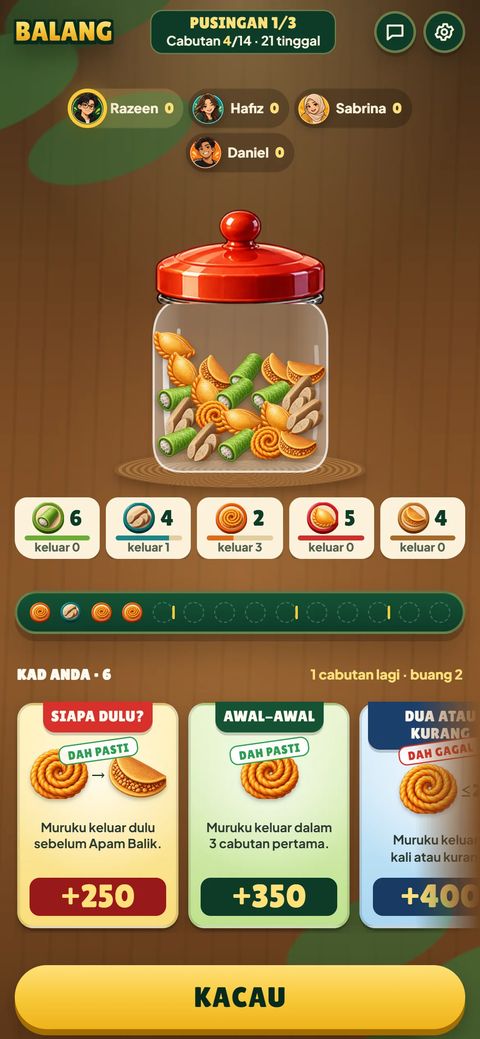
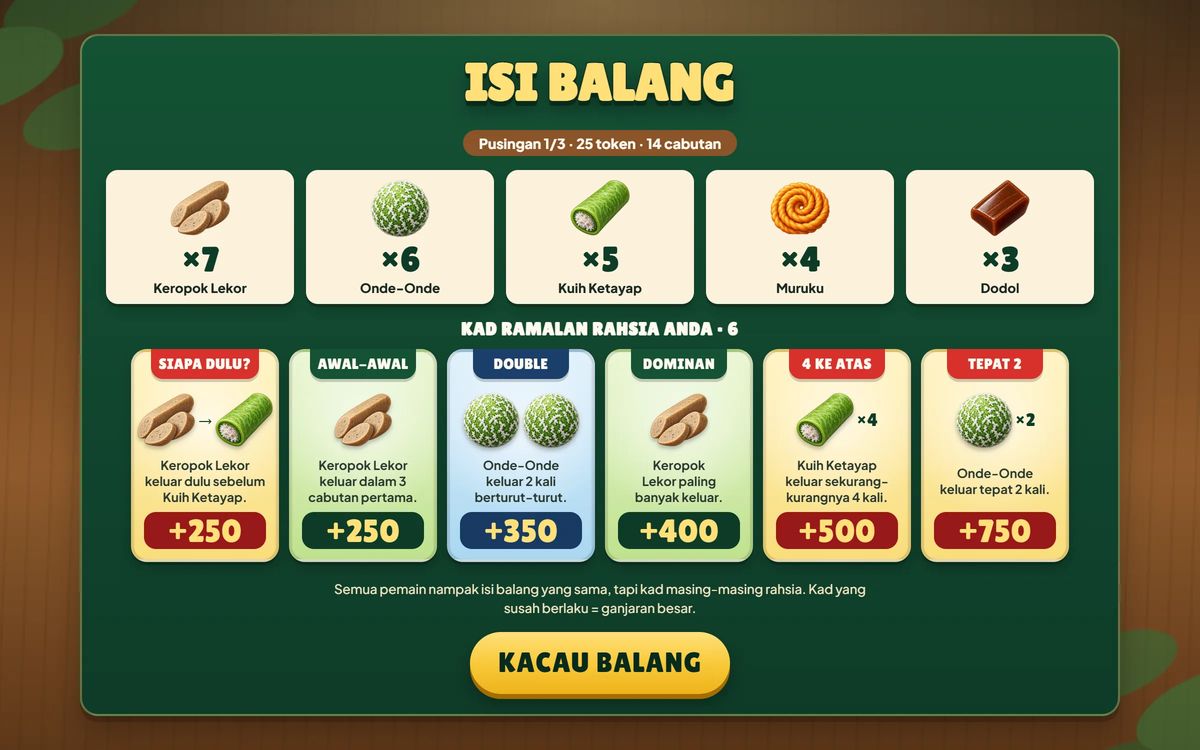
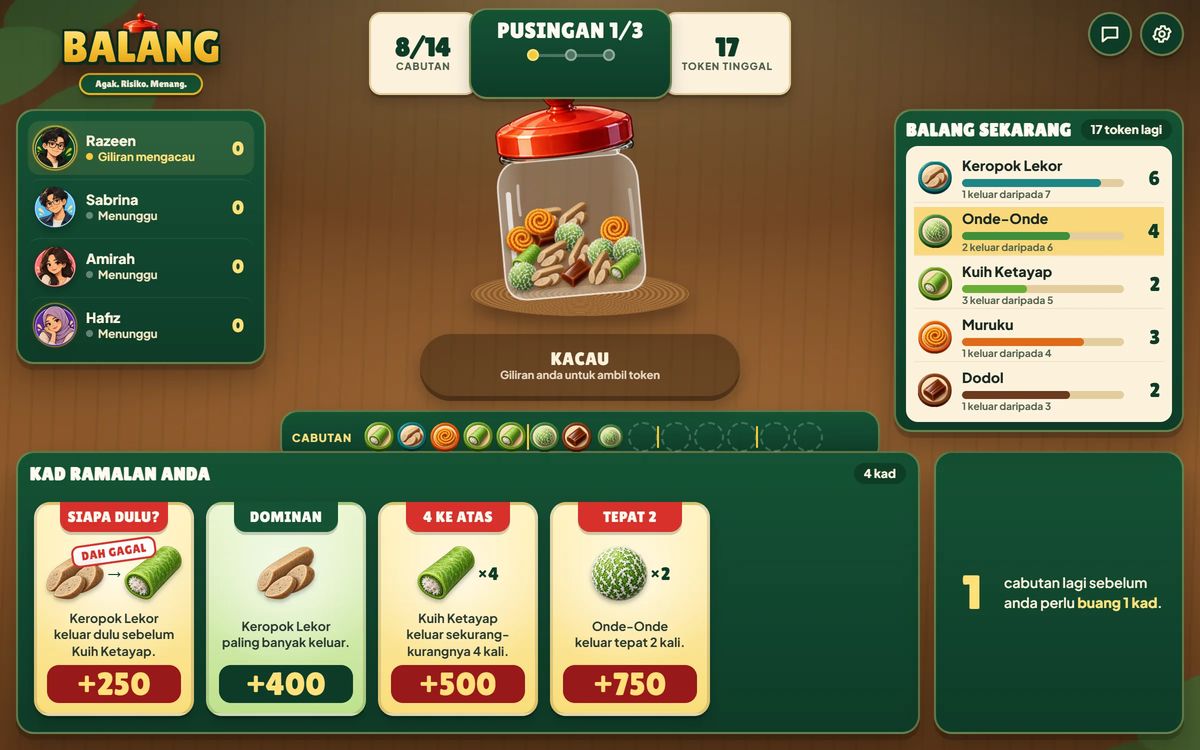
Real captures of the game from Razeen’s portfolio, taken on a local build against the built-in computer players, used with his permission. None are mock-ups.

What we can show.

  • Live and playable. balang.madebyrazeen.com is live. It says the game is free in the browser and needs no account.
  • Public source code on GitHub.
  • Rules changed by evidence. In the builder’s first bot-simulation report, about three in four locked cards came true, so the final choice carried little risk. The rules were changed so every final card counts and one goes on the negative side. In the same bot matches, that negative card now costs its owner points in about a third of rounds.

The balance figures above are builder-reported results from bot simulations, not outcomes from real players.

Small game, same lessons.

  1. Test the maths with bots before people. A reward table can look fair on paper and still be too easy in play.
  2. Trust boundaries matter, even in a game. The host holds the secrets and each guest is sent only their own view, so a guest’s browser never receives other players’ cards or the draw order.
  3. Numbers should feel honest. A risky prediction pays more because it really is less likely.
  4. Only claim what’s built. The landing copy was trimmed to match the build.

Have an idea that’s simple to explain but tricky to build?

We’ll help you write it down, keep the first version lean and plan how to ship something people can actually try. Free first consultation, pricing quoted after enquiry.

Sources

  1. Razeen Iqbal’s portfolio, Balang ↗. Overview, rules, architecture, balance testing, lessons and screenshots
  2. Balang live site ↗. The live, playable game
  3. GitHub repository, razeeniqbal/balang ↗. Public source code